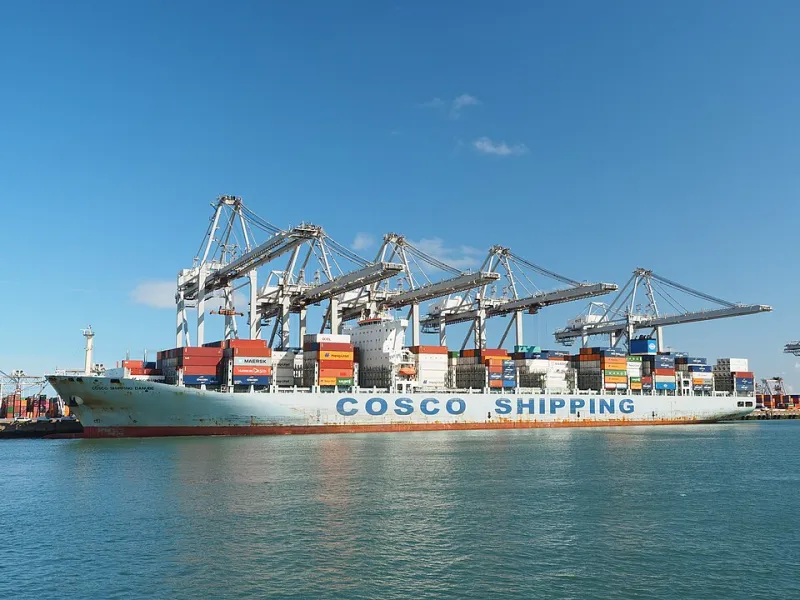
Reclassified at the Border: The Gulf Customs Trap That's Blindsiding American Exporters

For most American exporters, the Harmonized System code is a settled matter. Products leave US shores with classifications that have been verified, sometimes legally defended, and built into margin calculations with precision. The assumption is reasonable: HS codes are, after all, an internationally standardized framework. What many US companies are learning — often at significant financial cost — is that Gulf customs authorities operate with a degree of interpretive latitude that the standardized framework simply does not eliminate.
Reclassification at the point of entry is not a fringe occurrence in the region. It is a structural feature of how Gulf Cooperation Council customs systems function, and American businesses that fail to account for it are routinely absorbing unexpected duties, clearance delays, and compliance penalties that were never modeled into their export strategies.
Why the Same Product Can Carry Two Different Classifications
The root of the problem lies in a gap between how US exporters classify goods and how Gulf customs inspectors interpret them. In the United States, classification decisions are supported by binding rulings from US Customs and Border Protection, an extensive body of case law, and industry-specific precedent. Exporters operating in good faith can reasonably rely on these determinations.
Gulf customs systems, particularly those operating under UAE Federal Customs Authority guidelines and Saudi Zakat, Tax and Customs Authority frameworks, apply their own interpretive standards. These standards draw from the same international HS nomenclature but diverge at the six-digit and eight-digit subheading levels, where regional and national annotations introduce meaningful variation. A product classified as a general-purpose industrial component in the US may be reclassified as a specialized piece of equipment in Dubai, triggering a duty rate that bears no resemblance to what the exporter anticipated.
The divergence is compounded by the physical inspection process. Gulf customs officers are empowered to reclassify goods based on visual examination, material composition testing, and end-use assessment — even when documentation appears complete. A shipment of nutritional supplements, for instance, may arrive classified under food product codes but be reclassified under pharmaceutical subheadings after inspection, an outcome that can more than double applicable duties.
Real Costs That Companies Didn't See Coming
The financial consequences of reclassification are not abstract. Consider the experience of a mid-sized American manufacturer of polymer-based construction materials that entered the UAE market through a distributor arrangement. The company had classified its flagship product line under a plastics subheading that attracted a five percent duty. Upon arrival at Jebel Ali, customs inspectors determined that the materials more closely resembled composite building products, triggering reclassification under a heading carrying a twelve percent rate. On a shipment valued at $800,000, the difference was not a rounding error.
A similar pattern has emerged in the personal care sector. US companies exporting cosmetic formulations that contain both functional and aesthetic ingredients have found their products reclassified between cosmetic and medicinal categories depending on how Gulf inspectors interpret the primary purpose of specific compounds. The duty differential between these categories in several GCC markets can exceed fifteen percentage points.
In both cases, the companies had done what they considered to be thorough pre-export due diligence — within the US regulatory context. The oversight was not negligence. It was a failure to account for a distinct interpretive environment on the receiving end.
The Bureaucratic Architecture Behind the Problem
Understanding why these reclassifications happen requires appreciating how Gulf customs administrations are structured. Unlike the US system, where classification disputes are typically resolved through a centralized federal process, GCC customs operations retain significant authority at the port and emirate level. Individual inspectors at Abu Dhabi, Dubai, Sharjah, and Ras Al Khaimah ports may apply classification standards with slight but financially meaningful variation.
Furthermore, GCC countries have adopted the Gulf Common External Tariff as a baseline, but individual member states apply supplementary schedules, exemptions, and sector-specific rulings that create a layered compliance environment. A classification that clears Bahraini customs without issue may face scrutiny in Saudi Arabia, even for the same product traveling through a re-export route. This fragmentation is not a sign of administrative dysfunction — it is an inherent characteristic of a customs union that preserves meaningful national discretion.
For American exporters accustomed to a single federal customs authority, this distributed model represents a significant cognitive and operational adjustment.
A Framework for Pre-Shipment Verification
The companies navigating this environment successfully share a common practice: they treat Gulf customs classification as an independent exercise, entirely separate from US export classification. This means conducting product-specific HS code research against GCC tariff schedules before the first shipment departs, not after the first dispute arises.
A defensible pre-shipment verification process should include several components. First, obtain a formal classification opinion from a licensed Gulf customs broker or trade compliance specialist with direct experience in the destination market. Second, request advance rulings where available — the UAE and Saudi Arabia both have mechanisms for obtaining pre-clearance guidance, though the processes differ and timelines vary. Third, ensure that all technical documentation, including material safety data sheets, ingredient declarations, and product specifications, is prepared in a format that Gulf inspectors will use to support — rather than contradict — the intended classification.
Product labeling deserves particular attention. Descriptions on packaging that emphasize certain functional properties can inadvertently support a reclassification into a higher-duty category. Exporters should review label language specifically through the lens of Gulf customs interpretation, not US marketing conventions.
How Competitors Are Using Customs Brokers Strategically
Among US companies that have built durable Gulf market operations, customs broker relationships are treated as strategic assets rather than transactional services. The distinction matters. A transactional customs broker processes paperwork. A strategic customs broker provides advance intelligence on how specific product categories are being treated at specific ports during specific periods — information that can shift shipment timing, routing decisions, and even product formulation choices.
Several US exporters in the food and beverage sector have restructured their Gulf market entry around broker-led classification workshops, where product lines are reviewed against current GCC tariff interpretations before commercial quantities are committed. This approach adds modest cost to the pre-export phase but eliminates the far larger exposure of post-arrival reclassification disputes.
There is also a documentation strategy that experienced Gulf market operators employ: building a classification defense file for each product, assembled before shipment and available for immediate submission if an inspector raises questions. This file includes technical specifications, comparable classification decisions from other GCC ports, and, where applicable, manufacturer attestations regarding material composition and intended use.
The Competitive Advantage of Getting This Right
The Gulf's customs reclassification environment is not going to simplify itself. GCC member states continue to refine their tariff schedules in response to industrial policy priorities, trade agreement obligations, and revenue considerations. For American exporters, this means that classification risk is a recurring compliance challenge, not a one-time setup exercise.
The companies that treat it as such — investing in ongoing broker relationships, maintaining current knowledge of tariff schedule revisions, and building classification verification into their standard export workflow — are accumulating a genuine competitive advantage. Their landed costs are predictable. Their clearance timelines are reliable. And their Gulf market partners are not absorbing surprise charges that erode the commercial relationship before it matures.
For US companies still operating on the assumption that a valid American HS code travels cleanly through Gulf customs, the reclassification experience of their peers offers a clear signal: the cost of preparation is a fraction of the cost of discovery.