Routing Risk: A US Exporter's Guide to Building Gulf Distribution Networks That Can Withstand Disruption
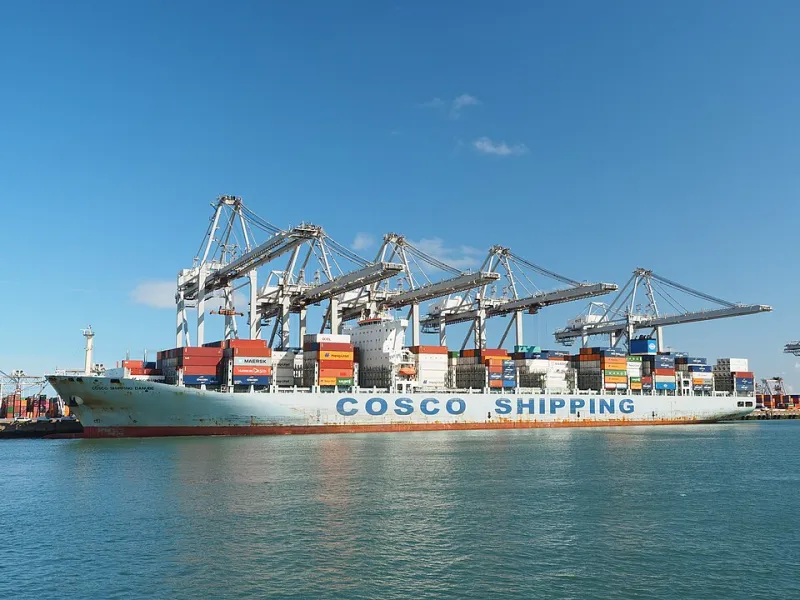
Photo: Alf van Beem, Public domain, via Wikimedia Commons
The Gulf region's port infrastructure is, by any objective measure, world-class. Jebel Ali in Dubai consistently ranks among the top ten busiest container ports globally. The UAE's network of free zones has been deliberately engineered to facilitate trade with speed and efficiency. For US exporters, this infrastructure has been a genuine competitive advantage — a gateway into not just the Gulf itself but broader Middle Eastern, South Asian, and East African markets.
And yet, the same geography that makes the Gulf such an attractive distribution hub also concentrates substantial risk. American companies that have built their regional logistics strategies around a single port, a single free zone, or a single regional carrier have learned — sometimes at considerable cost — that the Gulf's commercial efficiency can be interrupted with little warning and significant downstream consequences.
Understanding the Risk Landscape
The risks that Gulf-routed supply chains face fall into three broad categories, each requiring a distinct mitigation approach.
Geopolitical disruption remains the most dramatic and least predictable threat. The Strait of Hormuz, through which roughly 20 percent of global oil trade passes, is also a critical artery for container shipping into and out of Gulf ports. Periods of heightened tension in the region — whether involving Iran, Yemen's Houthi movement, or other actors — have historically produced insurance premium spikes, carrier route diversions, and in some cases temporary suspension of services. US exporters whose goods are in transit during such episodes have limited recourse and face the compounding costs of delayed delivery, storage, and re-routing.
Regulatory and policy shifts represent a subtler but increasingly common source of disruption. Free zone regulations in the UAE, Saudi Arabia, and other GCC states are subject to periodic revision, and changes to ownership requirements, re-export permissions, customs procedures, or product licensing can affect operations with relatively short notice. American companies that have established distribution infrastructure in a specific free zone without monitoring the regulatory environment have found themselves caught off guard by policy changes that required costly restructuring.
Operational and infrastructure disruptions — including port congestion, labor actions, equipment failures, and cyberattacks on logistics systems — round out the risk profile. While less dramatic than geopolitical events, these disruptions are statistically more frequent and can cause meaningful delays for time-sensitive shipments.
Case Studies in Disruption
The practical consequences of these risks are not theoretical. During the 2021 container shipping crisis, US exporters routing goods through Gulf ports experienced delays of four to eight weeks beyond normal transit times, with some shipments effectively stranded as carriers prioritized more profitable routes. Companies that had built buffer inventory in regional warehouses weathered the disruption significantly better than those operating on lean, just-in-time models.
More recently, the escalation of Houthi attacks on commercial shipping in the Red Sea — which began in late 2023 and continued through 2024 — forced major carriers to reroute vessels around the Cape of Good Hope, adding two to three weeks to transit times for goods moving between the US East Coast and Gulf ports. For American exporters with contractual delivery commitments, this translated directly into penalty exposure and customer relationship strain.
A US-based consumer goods company with distribution operations in the Jebel Ali Free Zone reported that its contingency planning, which included pre-positioned inventory at a secondary hub in Oman's Salalah port, allowed it to maintain regional supply continuity during the Red Sea disruption while competitors scrambled to reroute shipments.
Building Redundancy Without Breaking Budgets
The challenge for most US exporters — particularly mid-size companies without the logistics infrastructure of a multinational — is that redundancy costs money. Maintaining inventory at multiple regional hubs, qualifying multiple carriers, and monitoring regulatory developments across several jurisdictions all represent real operational overhead. The question is not whether to build redundancy, but how to do so proportionally.
Multi-hub distribution does not require equal inventory at every location. A tiered approach — primary stock at Jebel Ali with a smaller buffer at a secondary port such as Salalah, Sohar, or Dammam — provides meaningful protection against a primary hub disruption at a fraction of the cost of full duplication. The key is establishing the relationships and logistics agreements in advance, so that activating the secondary hub during a disruption does not require building infrastructure under pressure.
Carrier diversification is similarly achievable without proportional cost increases. US exporters should ensure that their Gulf routing agreements are not exclusively tied to a single carrier, and should periodically test secondary carrier relationships with actual shipments rather than allowing them to remain dormant on paper.
Free zone diversification is worth considering for companies that have established significant distribution infrastructure in a single location. The UAE alone operates more than 40 free zones with varying regulatory profiles, and neighboring GCC states offer additional options. A compliance review of secondary free zone options — conducted before a disruption, not during one — gives US exporters meaningful flexibility.
Real-time monitoring of both geopolitical developments and logistics industry intelligence is no longer optional for companies with material Gulf exposure. Several US-based logistics technology platforms now offer Gulf-specific risk monitoring, and regional freight forwarders with deep Gulf expertise are an underutilized resource for early warning on regulatory and operational developments.
The Strategic Takeaway
The Gulf's commercial infrastructure will continue to be among the most efficient in the world, and the region's role as a global distribution hub is not diminishing. But the companies that extract sustainable value from Gulf distribution networks are the ones that treat supply chain resilience as a strategic investment rather than a reactive expense. For US exporters, the time to build that resilience is during stable periods — because the next disruption, whatever form it takes, will not announce itself in advance.