Duty Blind Spots: What US Exporters Don't Know About Gulf Free Zone Transit Is Costing Them a Fortune

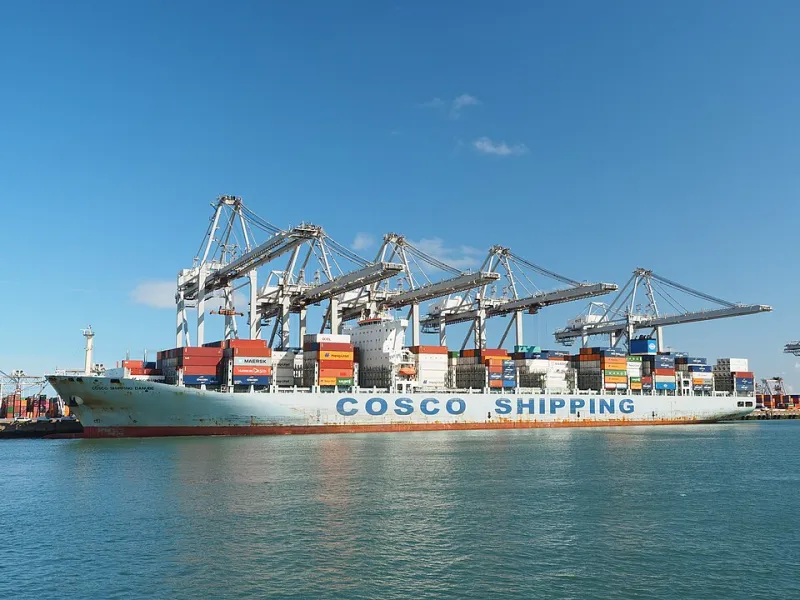
Photo: Petty Officer 1st Class Jon Rasmussen, Public domain, via Wikimedia Commons
For many American companies, the UAE's free zones — Jebel Ali, Dubai Airport Freezone, Sharjah Airport International Free Zone — represent an elegant solution to Gulf market entry. Goods flow in, get consolidated or repackaged, and then move onward to Saudi Arabia, Kuwait, Bahrain, or Oman. The assumption embedded in this model is that the free zone acts as a neutral corridor, a kind of commercial holding area where tariff obligations stay dormant until the final destination country takes over.
That assumption is increasingly dangerous.
Over the past three years, GCC customs authorities have tightened coordination around rules of origin verification and re-export documentation requirements. What was once a relatively permissive gray area has become a structured enforcement landscape — one that catches underprepared US exporters in expensive, time-consuming disputes.
The Anatomy of a Miscalculation
Consider a common scenario: a mid-sized American manufacturer ships industrial components to Jebel Ali Free Zone, where a local distributor repackages the goods and relabels them for onward sale into Saudi Arabia. The US company invoices the UAE distributor at one price point, the distributor invoices the Saudi buyer at another, and somewhere in between, the declared customs value — the figure on which Saudi import duties are calculated — doesn't accurately reflect the transaction chain.
This is not necessarily fraud. In many cases, it is simply the result of inexperience with how GCC customs authorities interpret the WTO Customs Valuation Agreement in a re-export context. Saudi Arabia's Zakat, Tax and Customs Authority (ZATCA) applies a transaction value method that traces the commercial relationship back to the original exporter when it detects inconsistencies. When that investigation reaches a US manufacturer who filed a standard commercial invoice without accounting for the re-export structure, penalties and retroactive duty assessments follow.
The financial exposure in large-volume shipments — heavy machinery, technology hardware, medical equipment — can exceed $200,000 in a single audit cycle.
Where Tariff Classifications Break Down
Harmonized System (HS) code classification is a pressure point that American exporters routinely underestimate in Gulf re-export contexts. A product correctly classified under US export regulations may carry a different tariff treatment under UAE import rules, and yet a third classification may apply when that same product is re-exported into a GCC member state under a bilateral trade preference arrangement.
The UAE's participation in the Greater Arab Free Trade Area (GAFTA), combined with individual GCC member states' own schedules of concessions, creates a layered classification environment. Products that qualify for preferential duty rates within the GCC must meet specific rules of origin criteria — and goods that have merely transited a free zone without sufficient transformation do not automatically inherit those preferences.
This distinction matters enormously. A US electronics exporter whose goods are assembled or substantially modified within a UAE free zone facility may be able to claim UAE origin for onward GCC shipments, reducing duty exposure significantly. A company that simply warehouses and relabels goods in the same free zone cannot make that claim — but many do, either unknowingly or on the advice of freight forwarders who are not customs law specialists.
The Re-Export Certificate Problem
UAE free zone authorities issue re-export certificates that are intended to accompany goods moving from the free zone to third countries. These certificates are critical documents in the customs chain, and their accuracy — particularly regarding declared values, HS codes, and country of origin statements — directly affects duty assessments at the destination port.
US companies that delegate certificate preparation entirely to UAE-based freight handlers often discover, during audits, that the documentation trail contains inconsistencies that cannot be easily explained. In GCC customs disputes, the burden of proof rests with the importer or their agent. Without clean, internally consistent documentation from the point of US export through to the Gulf destination, that burden becomes very difficult to discharge.
A compliance review conducted by a regional trade consultancy in 2023 found that approximately 34 percent of re-export certificates reviewed for US-origin goods passing through UAE free zones contained at least one classification or valuation discrepancy. The majority of those discrepancies were not intentional — they reflected documentation prepared by parties who were not aligned on the full commercial and regulatory picture.
Tariff Engineering: The Legitimate Path Forward
Tariff engineering — structuring supply chains, product specifications, and transaction documentation to minimize lawful duty exposure — is a well-established practice in international trade. In the Gulf re-export context, it requires a level of coordination that most US exporters have not yet built into their operational models.
The most effective approaches involve three elements working in concert.
First, HS code alignment across the entire transaction chain. The code declared on the US export filing, the UAE free zone entry documentation, and the GCC destination customs entry should be consistent and defensible. Where product modifications within the free zone genuinely change the classification, that change should be documented with a technical product description that customs authorities can verify.
Second, transfer pricing discipline. When the commercial relationship between a US exporter and a UAE distributor is not at arm's length — as is common in related-party or exclusive distribution arrangements — the declared customs value must be supported by a transfer pricing methodology that GCC authorities will accept. This is not a theoretical concern; ZATCA in particular has increased its scrutiny of related-party import valuations significantly since 2022.
Third, origin documentation that reflects the actual manufacturing and transformation process. US exporters whose products qualify as American-origin goods should maintain detailed bills of materials, production records, and supplier declarations that can support that claim if challenged. Goods that are substantially transformed within a UAE free zone facility should be assessed for UAE origin eligibility under applicable rules — and that assessment should be made by a qualified customs specialist, not a freight forwarder.
Building a Defensible Position
The companies navigating Gulf re-export tariff structures most effectively are those that treat customs compliance as a commercial function rather than an administrative afterthought. They engage Gulf-specialist customs lawyers or trade compliance consultants before the first shipment moves, not after the first audit notice arrives.
For US exporters moving significant volume through UAE free zones, an annual tariff exposure review — examining classification consistency, valuation methodology, and origin documentation — is a prudent investment. The cost of that review is typically a fraction of the duty savings or penalty avoidance it generates.
The Gulf's commercial infrastructure is sophisticated, and its regulatory environment is maturing rapidly. American exporters who approach UAE free zones as a simple logistics convenience, rather than as a structured legal and fiscal environment requiring deliberate planning, will continue to encounter the hidden costs that come with that misunderstanding.