Vision 2030's Open Door: Why Saudi Arabia Is the Gulf Opportunity Most American Exporters Are Sleeping On
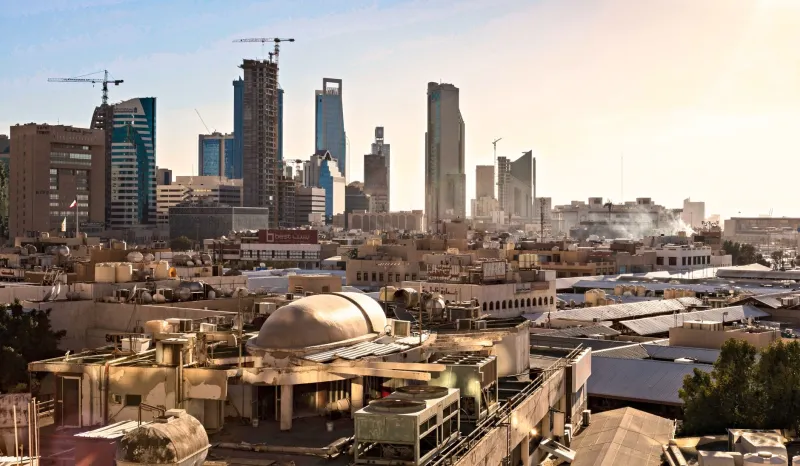
There is a predictable script most American companies follow when entering the Gulf. They land in Dubai, establish a free zone entity, hire a local distributor, and declare their Middle East strategy complete. The UAE is familiar, English-speaking, and well-documented. It feels manageable.
What that script misses is the considerably larger market sitting 200 miles to the west — one that is currently undergoing the most ambitious economic transformation in the modern Arab world, and one that is actively courting American business with an urgency that the Emirates, at this stage of its development, simply does not need to project.
Saudi Arabia is not a consolation prize. For US exporters willing to look past the UAE's polished reputation, the Kingdom represents a structurally distinct opportunity — and in many sectors, a significantly easier one to enter.
The Scale Differential Nobody Talks About
The UAE's GDP sits at roughly $500 billion. Saudi Arabia's economy is nearly six times larger, approaching $3 trillion. The Kingdom's population of 36 million dwarfs the UAE's 10 million, and its domestic consumption base is growing at a pace that reflects genuine demographic momentum rather than expatriate churn.
For American companies selling consumer goods, industrial equipment, healthcare technology, or food products, this scale difference is not academic. It translates directly into addressable market size, contract values, and the long-term revenue ceiling of a Gulf strategy.
Yet the majority of US exporters treat Saudi Arabia as a secondary consideration — a market to approach after UAE is figured out. That sequencing is costing them real money.
What Vision 2030 Actually Changed
Launched in 2016 under Crown Prince Mohammed bin Salman, Vision 2030 is frequently cited in business coverage but rarely examined in structural detail. For American exporters, the specific regulatory and procedural changes it has introduced matter far more than the headline narrative.
First, the Saudi Ministry of Investment — formerly SAGIA — has dramatically compressed the timeline for foreign business licensing. What once required months of bureaucratic navigation can now be completed in days through streamlined digital portals. The Kingdom has moved from 92nd to 38th on the World Bank's Ease of Doing Business Index in recent years, a shift that reflects genuine process reform rather than cosmetic policy changes.
Second, foreign ownership restrictions that once required a Saudi partner holding majority equity have been significantly relaxed across dozens of sectors. American companies in retail, wholesale, engineering services, and manufacturing can now establish 100 percent foreign-owned entities in the Kingdom — a structural change that removes one of the most historically cited deterrents to direct market entry.
Third, the government's localization program, known as Nitaqat, while often discussed as a hiring obligation, has created a parallel incentive structure that benefits foreign companies willing to invest in Saudi workforce development. Those who engage with the framework proactively often find faster approvals, preferential procurement positioning, and stronger relationships with government-linked buyers.
Less Competition, More Runway
Dubai is, by design, one of the world's most competitive commercial environments. Decades of infrastructure investment and brand-friendly positioning have made it a magnet for every multinational that wants a Middle East address. The result is a market where American companies are competing not just against each other, but against established European, Asian, and regional players with deep local networks.
Riyadh's competitive landscape looks different. While large multinationals have a presence in the Kingdom, the density of competition in mid-market and specialized sectors is considerably lower. American companies offering industrial technology, agri-food products, healthcare solutions, or professional services will find fewer entrenched rivals and more receptive procurement officers than they would in the UAE.
This is particularly true outside Riyadh. Cities like Jeddah, Dammam, and the emerging NEOM corridor represent markets where American brand recognition carries genuine weight and local commercial infrastructure is still being built — often with US companies in mind as preferred suppliers.
The Procurement Advantage
Saudi Arabia's government and quasi-government sector is spending at a scale that has no regional equivalent. Vision 2030's giga-projects — NEOM, the Red Sea Project, Diriyah, Qiddiya — represent hundreds of billions of dollars in planned procurement across construction, technology, hospitality, entertainment, and logistics.
The US-Saudi relationship, reinforced by defense partnerships and bilateral trade agreements, gives American companies a standing that translates into real procurement preference in many of these programs. The Saudi government has publicly committed to increasing imports from the United States across multiple sectors, and American exporters with the right product positioning can leverage that geopolitical alignment into commercial advantage.
This is not a dynamic that exists in the UAE to the same degree. The Emirates' procurement environment is more internationalized and more price-competitive. Saudi Arabia's strategic buying priorities create pockets of protected opportunity that reward American suppliers who engage early.
What First-Movers Are Already Doing
A quiet cohort of American companies — particularly in healthcare technology, food manufacturing, and clean energy — have been building Saudi market positions for the past three years. Their approach tends to follow a consistent pattern.
They establish a Riyadh entity directly, rather than attempting to service the Kingdom from a UAE hub. They invest in Arabic-language commercial materials and local relationship management. They engage proactively with the Saudi Export-Import Bank equivalent programs and the US Commercial Service's Riyadh office, which maintains strong ties with Vision 2030 procurement bodies. And they treat Saudi market entry as a primary strategy rather than a spillover from UAE operations.
The results, for those who have committed fully, have been notable. Contract values in Saudi procurement tend to be larger. Relationship tenure tends to be longer. And the competitive pressure, at least for now, remains more manageable than in the Emirates.
The Practical Considerations
None of this is to suggest that Saudi market entry is without friction. Cultural fluency matters more in the Kingdom than in the UAE's cosmopolitan business environment. Relationship-building timelines are longer. Payment cycles, while improving, can still test working capital. And the regulatory environment, despite genuine reform, still requires careful navigation — particularly around product certification, Halal compliance for food exports, and sector-specific licensing.
American companies should also approach the Nitaqat employment framework with eyes open. The localization requirements are real, and companies that ignore them create compliance exposure that can disrupt operations at critical moments.
These are manageable challenges. They are not reasons to defer.
Rebalancing the Gulf Strategy
For most American exporters, the UAE will remain a valuable market and a useful regional base. Its infrastructure, banking system, and English-language business environment have genuine advantages that should not be dismissed.
But treating UAE as the whole of a Gulf strategy — while Saudi Arabia undergoes its most significant commercial opening in a generation — is a miscalculation that compounds over time. The companies entering Riyadh and Jeddah today are building relationships, brand recognition, and supply chain footholds that will be far harder and more expensive to replicate in five years.
The door is open. The question is whether American exporters are paying attention.