Counting What Doesn't Get Counted: The Hidden Commerce Distorting US Companies' Gulf Market Picture
When a US company reviews its Gulf revenue figures at the end of a fiscal quarter, the numbers on the page tell one story. The market, however, is telling a completely different one. Across the UAE, Saudi Arabia, Kuwait, and beyond, a substantial portion of commercial activity flows through channels that conventional market research was never designed to detect. For American exporters and investors who rely on those research reports to benchmark their performance, the result is a persistent and costly miscalculation.
This is not a story about fraud or evasion in any simple sense. It is a story about structural difference — the ways Gulf commerce has historically organized itself around relationships, trust networks, and cash-based settlement that predate and often outperform the formalized systems Western companies are accustomed to measuring.
The Formal Numbers and Why They Lie
Standard market intelligence in the Gulf region draws on customs declarations, corporate filings, trade association data, and survey-based research. Each of these sources has blind spots. Customs data captures declared import values but misses goods that move through informal re-export networks or are undervalued at the point of entry. Corporate filings in many Gulf jurisdictions are limited in scope and not always publicly accessible. Trade association membership skews toward larger, more formalized businesses, leaving out the vast middle tier of family-run trading houses that collectively move enormous volumes of product.
The result is that when a US company sees a market share figure — say, twelve percent of a particular product category in the UAE — that figure is almost certainly calculated against an incomplete denominator. The actual market is larger than what gets measured, and the company's true penetration rate may be simultaneously higher and less strategically meaningful than it appears.
How Informal Networks Actually Function
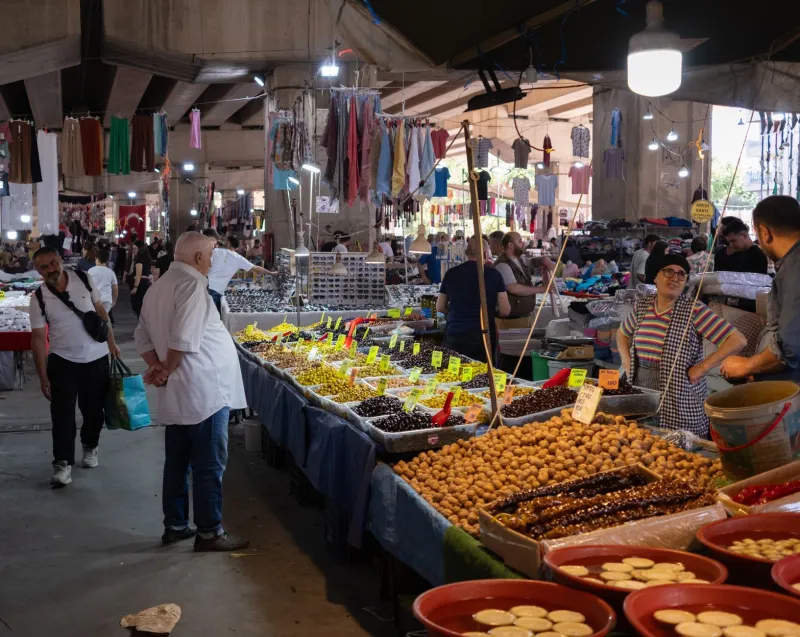
To understand the gap, it helps to understand how informal Gulf commerce operates in practice. In Dubai's older trading districts — Deira, Al Ras, and parts of Bur Dubai — goods change hands through networks of merchants who have done business together for decades, sometimes across multiple generations. Transactions are often settled in cash or through hawala-style arrangements, with credit extended on the basis of personal reputation rather than formal credit checks. Invoices may be issued, but they frequently do not reflect the actual transaction price or volume.
This is not a marginal phenomenon. Researchers and regional trade consultants who have studied Gulf commerce extensively estimate that informal B2B transactions account for anywhere from twenty to forty percent of total trade volume in certain product categories, particularly in consumer goods, electronics, construction materials, and food commodities. For US exporters in these sectors, that means a meaningful share of their products may already be circulating in Gulf markets through channels they have never directly engaged.
The irony is sharp: a company may be more present in a market than it realizes, while simultaneously having less control over how its products are priced, positioned, and serviced.
The Re-Export Multiplier Effect
Another dimension of this problem involves the UAE's role as a regional re-export hub. Goods imported into Dubai — including many American-origin products — are frequently redistributed across the wider Middle East, North Africa, and South Asia without the original exporter's knowledge or involvement. These secondary transactions generate revenue and market exposure that never feed back into the exporter's performance metrics.
A US manufacturer of industrial components, for example, might sell to a UAE-based distributor and record that as a single transaction. That distributor may then sell portions of the shipment to traders in Iraq, Iran, Pakistan, and Egypt through informal channels. The manufacturer's CRM system shows one deal. The actual commercial footprint is five times larger — and entirely untracked.
This creates a specific strategic hazard. When that manufacturer decides to expand into Iraq or Pakistan as a new market, it may invest heavily in market entry infrastructure without realizing that its products are already widely known and used there. Pricing strategies developed in isolation from this reality can land badly. Distributor negotiations suffer because the company is negotiating without full knowledge of existing demand.
Rethinking the Research Toolkit
Capturing informal market activity requires a different set of research methods than most US companies currently deploy. The following approaches have proven effective for organizations willing to invest in genuine market intelligence rather than off-the-shelf reports.
Ethnographic trade mapping. Engaging researchers who physically walk the souks, wholesale markets, and smaller trading zones — and who speak Arabic fluently — can surface transaction patterns that no database will ever reflect. This is qualitative work, but it yields directional insights that quantitative data simply cannot.
Distributor channel audits. Rather than accepting a distributor's sales reports at face value, companies can conduct structured interviews with the distributor's own downstream customers. This often reveals secondary and tertiary distribution layers that the primary distributor has not disclosed.
Social listening adapted for Gulf commerce. WhatsApp groups and Telegram channels function as informal trading platforms across the Gulf. Monitoring these channels — with appropriate linguistic and cultural expertise — can reveal pricing, product availability, and demand signals that predate formal market data by weeks or months.
Cash transaction proxies. Indirect indicators such as import volume data cross-referenced against retail price surveys can help triangulate the scale of informal activity even when direct measurement is impossible.
The Strategic Recalibration This Demands
Once a US company accepts that its Gulf market picture is incomplete, several strategic adjustments become necessary. First, market share targets need to be set against realistic total addressable market estimates that account for informal volume. Benchmarking against an undercounted market produces false confidence and misallocates resources.
Second, pricing strategy requires adjustment. If a company's products are already circulating in informal channels at prices it did not set, its formal pricing structure may be undermining its own market position. Understanding the informal price points for competing and complementary products is essential before setting list prices.
Third, and perhaps most importantly, relationship investment needs to extend beyond tier-one distributors. The traders, brokers, and informal intermediaries who sit below the formal distribution layer are not obstacles to be bypassed — they are often the actual connective tissue of Gulf commerce. Building relationships with these actors, even without formalizing those relationships contractually, provides intelligence and influence that no amount of formal market research can replicate.
Seeing the Whole Market
The Gulf's informal commercial economy is not a problem to be solved. It is a structural feature of a region where trade has always been conducted through personal networks, adaptive improvisation, and trust-based credit — long before Western-style corporate commerce arrived. American companies that approach Gulf markets with the assumption that what they can measure is all that exists will perpetually underestimate both the opportunity and the competition.
The companies finding durable success in this region are those willing to invest in understanding commerce as it actually functions, not merely as it appears in the reports. That means getting closer to the ground, building relationships across the full spectrum of the trading ecosystem, and accepting that the most valuable market intelligence in the Gulf has never been written down anywhere.