Priced in Dirhams, Paid in Problems: The Currency Complexity US Exporters Are Underestimating in Gulf Markets
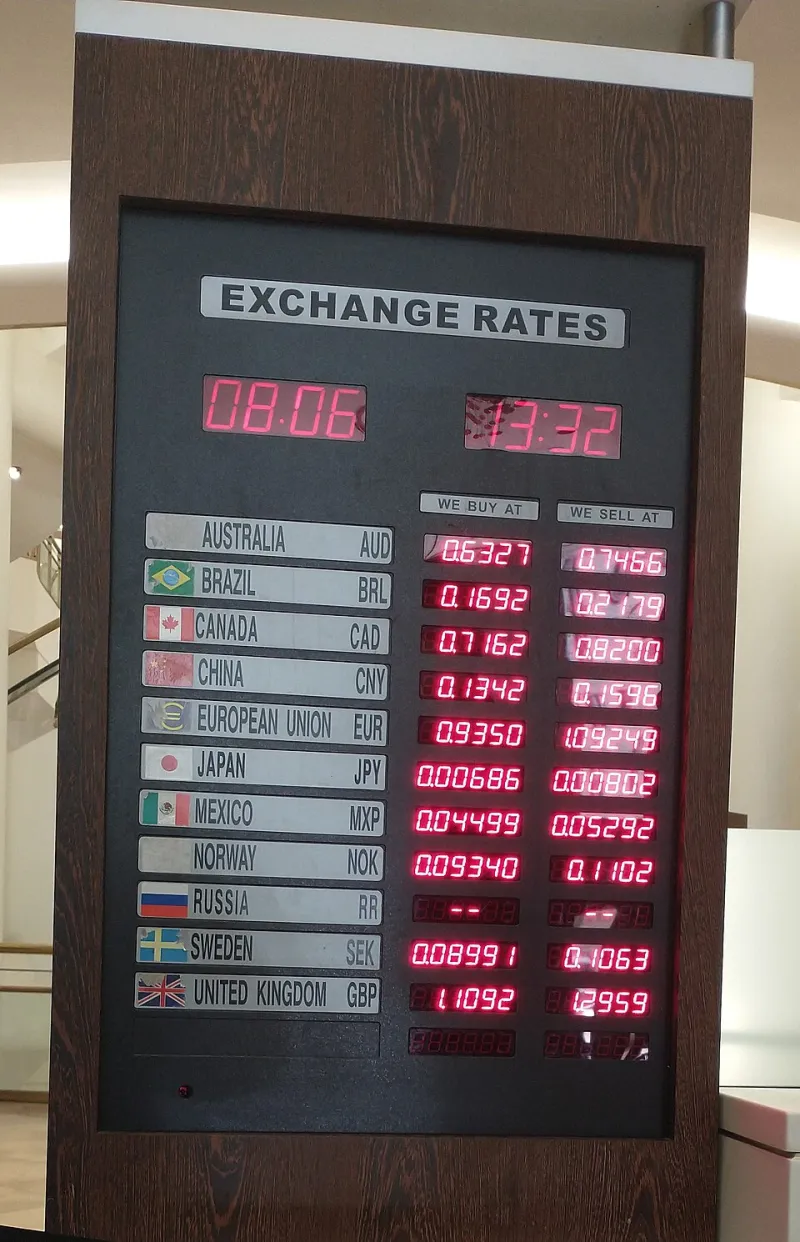
Photo: Dvortygirl, CC BY-SA 4.0, via Wikimedia Commons
The AED-USD peg is one of the most stable currency arrangements in the world. Anchored at approximately 3.67 dirhams to the dollar since 1997, it has weathered oil price collapses, global financial crises, and regional geopolitical upheaval without meaningful deviation. For American exporters, this stability is genuinely valuable—and genuinely misleading.
The UAE is a market, not a region. And the moment a US company begins treating the Gulf as a single commercial territory, the dirham peg stops being a shield and starts being a blind spot.
The Peg Is Not the Whole Picture
Saudi Arabia maintains its own peg to the dollar, as does Bahrain. But Qatar, Kuwait, and Oman operate under different currency regimes with varying degrees of flexibility. The Kuwaiti dinar, pegged to a basket of currencies rather than the dollar alone, moves independently of USD fluctuations. The Omani rial, while formally pegged, operates in an economy with structural fiscal pressures that periodically generate depreciation speculation in currency markets.
For a US exporter quoting prices in dollars across multiple GCC markets, this patchwork creates asymmetric exposure. A price increase driven by dollar strengthening may be absorbed smoothly by Emirati buyers but generate significant pushback from Kuwaiti or Omani distributors whose local purchasing power has effectively declined.
This dynamic became acutely visible between 2021 and 2023, when aggressive Federal Reserve rate hikes strengthened the dollar substantially against a broad range of currencies. US exporters pricing in USD saw their products become materially more expensive in local-currency terms across non-pegged Gulf markets—without any change in their own cost structures or margin targets.
What Finance Leaders Are Actually Dealing With
Senior finance executives at US export companies operating in the Gulf describe a pricing environment that is considerably more nuanced than their initial market entry plans anticipated.
One CFO at a California-based industrial equipment manufacturer described the challenge this way: the company had structured all Gulf contracts in US dollars, reasoning that the dirham peg made currency risk negligible. What the team had not modeled was the knock-on effect of dollar strengthening on their Saudi and Omani distributors' willingness to place forward orders. When those distributors began delaying purchase commitments, waiting to see whether dollar strength would moderate, the company's Gulf revenue forecasting became essentially unreliable.
A finance director at a Texas-based consumer goods exporter noted a different dimension of the problem: customer expectations for price stability. Gulf B2B buyers—particularly large retail chains and government procurement offices—frequently negotiate multi-year supply agreements with fixed or capped pricing. A US supplier quoting in dollars with no currency clause protections can find itself locked into pricing that erodes margin significantly if the dollar appreciates against the buyer's functional currency during the contract term.
The Hidden Cost of Hedging
The standard corporate finance response to currency exposure is hedging through forward contracts or options. In theory, this allows a US exporter to lock in exchange rates for future transactions, eliminating uncertainty. In practice, hedging Gulf currency exposure carries costs and complications that many smaller and mid-sized exporters underestimate.
Forward contracts for less liquid Gulf currencies—particularly the Kuwaiti dinar and Omani rial—carry wider bid-ask spreads than major currency pairs, increasing the effective cost of protection. Options strategies, while more flexible, require treasury sophistication that many export-focused companies simply do not have in-house. And for companies with irregular Gulf order flows, the mismatch between hedging instruments and actual transaction timing can create its own form of financial exposure.
Several finance leaders interviewed for this piece noted that their companies had effectively concluded that full hedging was not economically viable for Gulf operations at current revenue scales. Instead, they had moved toward a combination of partial hedging, contractual protections, and pricing architecture adjustments.
Building a Pricing Framework That Accounts for Currency Reality
For US exporters looking to operate sustainably across Gulf markets, three tactical frameworks have demonstrated consistent effectiveness.
Dynamic pricing with currency adjustment clauses. Rather than quoting fixed dollar prices for extended contract periods, leading exporters are incorporating explicit currency adjustment mechanisms into Gulf B2B agreements. These clauses specify that contract pricing will be reviewed—and adjusted within agreed parameters—if a defined exchange rate benchmark moves beyond a stated threshold. While Gulf buyers initially resist such provisions, they can be framed as mutual protection mechanisms that reduce the risk of contract renegotiation or non-renewal.
Local-currency invoicing for select markets. Some US exporters have found that invoicing in Saudi riyals or UAE dirhams—while accepting the administrative complexity of multi-currency receivables—builds commercial relationships with Gulf buyers who prefer local-currency transactions. This approach transfers currency risk to the exporter but can be managed through targeted hedging of the specific currency exposures created.
Tiered pricing by market. Given the divergent currency dynamics across GCC states, a single Gulf pricing tier is increasingly difficult to sustain. Companies that have developed market-specific pricing models—reflecting local currency conditions, competitive landscapes, and distributor margin requirements—report more stable revenue performance across the region than those applying uniform pricing from a UAE base.
The Broader Strategic Implication
Currency management in Gulf markets is ultimately a strategic question, not merely a treasury function. The decisions a US company makes about how it prices, invoices, and contracts in the region directly affect its competitive positioning, its distributor relationships, and its ability to forecast and plan.
The dirham peg is a genuine advantage for US companies focused primarily on the UAE. But the Gulf is a multi-currency, multi-regulatory environment, and the companies building durable commercial positions across the region are those that have looked past the peg and built pricing architectures capable of absorbing the full complexity of what lies beneath it.
For American exporters still treating Gulf pricing as a straightforward dollar-denominated exercise, that reassessment is overdue. The currency war may be hidden—but its costs are entirely visible on the bottom line.